

The Joint That Carries More Than Weight
The knee is often treated as a mechanical hinge — a simple connector between the hip and the ankle. But in reality, it is far more nuanced. It absorbs force, transmits energy, stabilizes movement, and adapts to a wide range of demands — from walking and climbing to running and kneeling.
Yet knee health is rarely considered until discomfort, stiffness, or limitation appears.
The truth is this: the knee is not typically the root of the issue. It is often the messenger.
Understanding knee health requires moving beyond symptom management and toward systems thinking — examining strength, mobility, coordination, and long-term resilience.
This article explores knee health through that lens.
The Architecture of the Knee


The knee is a complex joint formed by the femur (thigh bone), tibia (shin bone), and patella (kneecap). It is stabilized by key ligaments — including the ACL, PCL, MCL, and LCL — and cushioned by cartilage and the menisci.
It is often described as a hinge joint, but that description is incomplete. The knee also rotates slightly, translates subtly, and relies heavily on muscular control to function optimally.
It sits between two powerful joints:
- The hip — built for mobility.
- The ankle — built for adaptability.
When either of those joints underperforms, the knee often absorbs the consequence.
Why Knee Issues Are So Common
Knee concerns affect individuals across age groups — athletes, office workers, active adults, and those returning to movement after long breaks.
Common contributing factors include:
- Limited ankle mobility
- Reduced hip strength
- Poor load management
- Repetitive stress without recovery
- Sudden spikes in activity
- Deconditioning
In many cases, the knee is simply managing more load than it was prepared to handle.
The body is adaptable — but it responds to gradual exposure, not abrupt demand.
The Role of Strength in Knee Resilience

Strength is not about aesthetics. It is about capacity.
The quadriceps, hamstrings, glutes, and calves all influence knee mechanics. When these muscle groups are conditioned and coordinated, the knee experiences smoother force distribution.
Key movement patterns that support knee resilience include:
- Squats (with appropriate depth and control)
- Step-down variations
- Hip hinges
- Controlled lunges
- Calf strengthening drills
But strength must be progressive. Load should increase gradually, respecting tissue adaptation timelines.
The aim is not maximal performance — it is sustainable capacity.
Mobility: The Often Overlooked Contributor
Restricted mobility at the ankle or hip often leads to compensatory patterns at the knee.
For example:
- Limited ankle dorsiflexion can increase stress at the front of the knee during squatting.
- Reduced hip internal rotation may alter knee tracking during dynamic tasks.
Mobility work does not need to be aggressive. It needs to be intentional.
Short, consistent sessions that explore range under control tend to outperform sporadic stretching sessions.
Mobility is not flexibility alone. It is usable range.
Load Management: The Missing Conversation
The body adapts to stress — provided the stress is appropriate.
Many knee setbacks occur not because movement is harmful, but because the progression was too rapid.
Examples include:
- Increasing running distance too quickly
- Adding plyometrics without foundational strength
- Returning to sport without graded exposure
A simple principle applies:
Increase either volume or intensity — not both simultaneously.
Adaptation thrives on predictability.
Alignment and Movement Quality
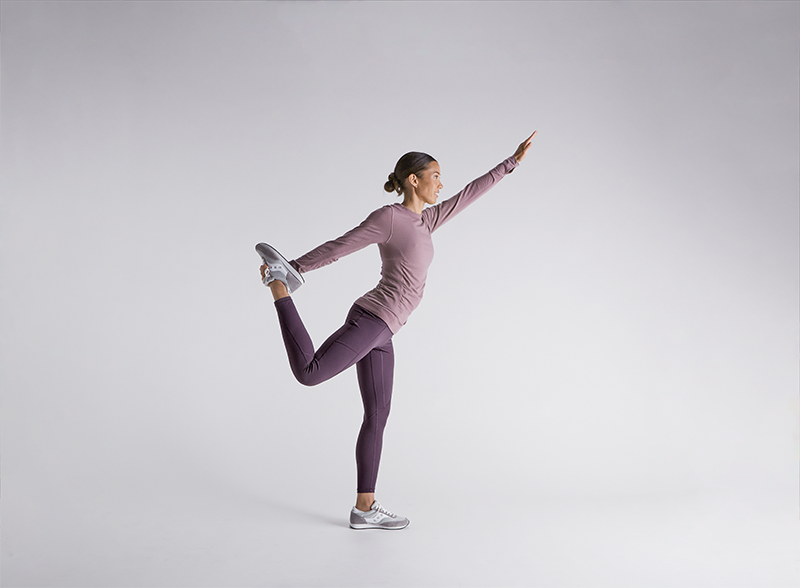
Movement quality is context dependent. There is no single “perfect” alignment.
However, observable patterns such as excessive inward collapse during loaded tasks may indicate insufficient strength or coordination elsewhere.
Improving movement quality is rarely about cueing alone. It is about improving capacity.
When tissues are stronger and ranges are available, alignment often improves organically.
The Psychological Component of Knee Health
Knee concerns are not purely mechanical.
Fear of movement, prior setbacks, and uncertainty can influence how the joint is loaded.
Education plays a powerful role here.
Understanding that discomfort does not always indicate damage allows gradual re-exposure to movement.
Confidence is built through exposure, not avoidance.
Age and the Knee: A Realistic Perspective
Joint changes occur with time. Imaging often reveals structural differences in individuals with and without symptoms.
The presence of structural change does not automatically dictate limitation.
Capacity can improve at nearly any stage of life — provided progression is appropriate.
Strength training, when guided responsibly, has demonstrated benefits for joint function across age groups.
The narrative around aging knees needs reframing:
Change does not equal decline.
Recovery and Regeneration
Recovery is not passive inactivity.
It includes:
- Sleep quality
- Nutritional adequacy
- Active circulation through low-load movement
- Strategic rest days
- Stress regulation
The knee, like all tissues, remodels in response to stimulus. Without recovery, adaptation stalls.
Consistency beats intensity.
Building a Knee-First Weekly Template
A balanced weekly approach might include:
2–3 strength sessions
Focusing on lower body compound movements and single-leg control.
1–2 mobility sessions
Targeting ankles, hips, and controlled knee flexion/extension ranges.
Low-impact conditioning
Cycling, swimming, walking, or sled work.
Gradual sport-specific exposure
For those returning to dynamic activity.
No dramatic overhauls. No extremes. Just structured exposure.
The Bigger Picture
The knee is rarely the villain.
It is a barometer — a joint that reveals imbalances in strength, mobility, and load management.
Treating it in isolation often leads to temporary relief rather than durable adaptation.
The work lies upstream and downstream — in the hip, ankle, and nervous system.
Knee health is less about quick fixes and more about layered resilience.
A Practical Next Step
For those looking to better understand ongoing knee discomfort or recurring limitations, structured guidance can make the process clearer and more sustainable.
A free Discovery Visit is available at Active Kare for individuals interested in exploring knee health from a strength and movement perspective. This session is designed to assess current capacity, identify contributing factors, and outline practical next steps grounded in long-term resilience.
Book a free DV at Active Kare today by visiting the website to explore knee discomfort and movement limitations in a structured, supportive setting.
Final Reflection
The goal is not a perfect knee.
It is a capable one.
A knee that can tolerate walking long distances, navigating stairs, participating in sport, or sitting comfortably without constant attention.
Capacity is built quietly — through repetition, progression, and patience.
In a world that favors instant solutions, knee health rewards the long game.
And perhaps that is the real lesson:
Resilience is rarely dramatic.
It is practiced.